Text by: David Prymus
What path have I taken, and why Finidr?
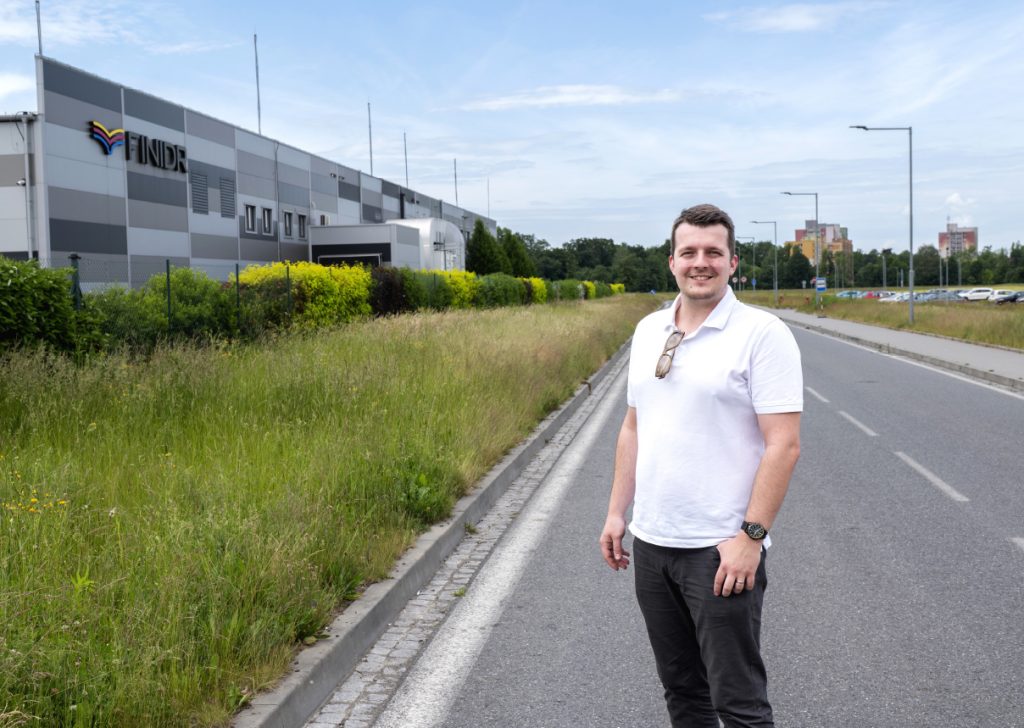
Technology and data analysis have long been the foundation of my professional career. I started out in heavy industry in the energy and water management sectors, where I focused on ensuring key processes for utilities.
After gaining experience in a corporate environment, I sought new challenges at a startup, where our small team handled the entire textile production process, including outsourcing and recycling. Unfortunately, the company’s direction no longer aligned with my expectations, so I looked for a more stable environment with room for further growth.
That’s why I chose FINIDR—and technology once again.
Working at FINIDR
In general, working at FINIDR is a wonderful synergy of two worlds (corporate vs. startup). On the one hand, there’s a company with just under 800 employees and 2 billion in revenue. On the other hand, there’s a company that, in just a few weeks, developed a brand-new 3D cutting process and successfully demonstrated it to its clients using samples.
We’re generating new orders, and this is a new showcase for us. This approach is what sets us “Finidr folks” apart from the rest. And the 3D cutting process is a prime example of the kind of mindset we need to adopt as we look toward the company’s future goals and direction.
The Future of Technology?
Clear specifications from the sales department and 100% readiness for production. Such a task actually sounds very simple, and to a certain extent, it is.
Historically, technology has passed through several milestones that have gradually automated processes and pre-production. The result is titles that pass through the departments with minimal intervention.
It’s no wonder—we’ve been producing books for over 30 years. We have a wealth of experience, but we often forget the most important thing: how quickly we’ve grown and where we’re headed. The things we used to be able to “work around” on the fly can no longer be handled at this volume of work. The systems that worked for us
10 years ago are becoming confusing. And given the total volume of orders, there’s no longer any room to ask “this way or that way.” We need to be clear.
A Shared Journey and People
The path always lies in gradual improvement. It is a process that takes time, but the results will be reflected in efficiency and employee satisfaction. We will always face the decision of “where to direct the customer to ensure efficient manufacturability.”
The key is—and will always be—finding a balance between flexibility and clearly defined rules that will safeguard quality, manufacturability, profitability, and capacity.
The result of 3D cutting is immediately visually appealing. Our procedures are no longer as visible, which is why we must place even greater emphasis on ensuring they are well-designed and thoughtfully configured.
Are you familiar with Japanese haiku?
I recommend this one.
As I continue on my journey,
I, too, become the path.
Matsuo Bashō