One Step Further Every Day
About Me and Why I’m Here
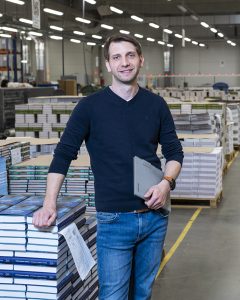
I joined the company as Production Director with the goal of helping to further develop our production.
I’ve been working in manufacturing for many years. Over the course of my career, I’ve held various roles—I worked as a machine setter, maintenance supervisor, and later as a production manager, where I was also responsible for scheduling and the warehouse. Thanks to this experience, I know that for production to run smoothly, it takes more than just working at the machine. The entire chain must function—machines, maintenance, planning, the warehouse, and collaboration between departments. If one link fails, it will ultimately always show up in production.
I live in Štramberk pod Trúbou, where my family is also based. At work, I’ve always enjoyed driving things forward and working with people to find solutions for improving production.
My management style is based on data and the realities of operations. I want to stay in touch with the people working at the machines and understand why things in production happen the way they do.
Above all, I want us to work as a team—to tackle problems together and look for solutions, not someone to blame.
Where do we want to take production next?
Our goal is to continue developing our production capabilities so that we can consistently handle high order volumes without unnecessary downtime or complications in the process.
In addition, our production is highly seasonal—the busiest period always runs from August to November, when order volumes grow rapidly.
That is why we aim to be able to produce up to 3.2 million books per month during these months.
But it’s not about working faster at any cost. Our primary goal is to improve the production process—reducing downtime, unnecessary handling, or situations where machines aren’t running as efficiently as they could.
A typical example is when we have two identical sewing machines side by side, and one runs faster than the other. Often, this isn’t a major problem, but rather a minor detail in the process that adds up over time. It is precisely these kinds of things that we want to gradually identify and improve.
Production is a complex system where many small details make a difference. Not everything can be changed immediately, but what’s important is that we take a step forward every day.
Transparency and Data Analysis
I place a strong emphasis on transparency and data analysis so that we have a clear picture of what is actually happening on the production floor. Thanks to our reporting, we can better identify where downtime occurs, where time is being wasted, and where there is room for improvement.
But data alone isn’t enough. That’s why we also go directly to the production floor (Gemba walk) to see the reality of the workplace and look for specific improvements right where they arise.
Improvements from the People on the Floor
Ideas from people directly on the production floor are a very important part of improvement. It is you, who work at the machines every day, who often see best where complications arise or where work can be done more easily.
I would like to see initiatives and suggestions for improvement come as much as possible from the people on the floor—from you, who know the work best.
If we manage to move production forward by a small step every day, I am convinced that together we will achieve our goal—namely, producing up to 3.2 million books during the busiest months of the year.
Acknowledgments
Thank you all for your cooperation and the work you do every day on the production floor. I greatly appreciate the dedication of our production staff and the support from other departments.
I encourage you to share your suggestions and ideas regarding operations with me—these are often the most valuable source of inspiration for further improvements.